

Outdoor Design Trends for 2026: What’s In (and What’s Out)
Outdoor spaces are no longer considered seasonal add-ons. In 2026, restaurants, hotels, commercial properties and residential spaces are designing outdoor areas to work year-round, regardless of weather. Flexibility, climate control, and smarter use of existing space are shaping the future of outdoor design.
Below, we break down the key INS and OUTS for outdoor design in 2026. 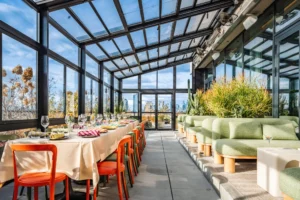

What’s IN for Outdoor Design in 2026:
Retractable Roofs
Retractable roof systems are increasingly popular because they offer flexibility without sacrificing aesthetics. These systems allow operators to respond to changing weather while maintaining a consistent experience year-round.
Year-Round Outdoor Use
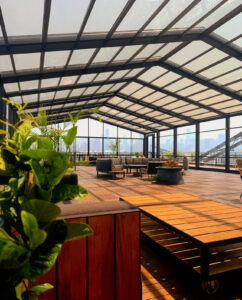
Outdoor dining and gathering spaces are expected to perform in every season. Properties are prioritizing designs that allow patios, rooftops, pools and courtyards to remain open throughout the year instead of shutting down for months at a time.
Flexible Outdoor Spaces
One-size-fits-all designs are giving way to adaptable spaces. The ability to open up when the weather is nice and close off when conditions change is becoming a baseline expectation.
Climate Control With Less Wasted Energy
Smarter climate control is a major focus for 2026. Enclosed and semi-enclosed outdoor spaces can better retain heat in colder months and provide airflow during warmer seasons, reducing the need for excessive energy use.
Fewer Weather-Related Closures
Weather should not dictate revenue or use. Designs that protect against rain, wind, and temperature changes help reduce canceled events, lost reservations, empty tables and unused pools and patios.
Better Use of Existing Square Footage
Rather than expanding or rebuilding, businesses and homeowners are investing in solutions that help them get more use out of the space they already have. Efficient outdoor design supports long-term value and sustainability.

What’s OUT for Outdoor Design in 2026:
Seasonal-Only Patios
Outdoor spaces that only function part of the year are becoming less practical. In 2026, underutilized patios are seen as missed opportunities.
Fixed Roofs That Limit Flexibility
Permanent structures that can’t adapt to changing conditions often restrict how a space can be used. Flexibility is now more valuable than permanence.
Clunky or Temporary Weather Protection
Makeshift enclosures and temporary fixes can disrupt both aesthetics and functionality. Long-term solutions are replacing short-term workarounds.
Underutilized Outdoor Areas
Empty patios and unused spaces represent lost potential. Design trends are shifting toward solutions that keep outdoor areas active and inviting.
Letting Weather Control Revenue
When weather determines whether a space can be used, businesses lose consistency. Design strategies in 2026 focus on reducing that uncertainty.
Why These Trends Matter
Outdoor design in 2026 is driven by more than aesthetics. Flexibility improves guest experience, supports consistent revenue, and helps businesses operate more efficiently. Adaptable outdoor spaces also reduce waste by limiting the need for repeated seasonal installations or rebuilds.
The goal is simple: create outdoor environments that work as hard as indoor ones. 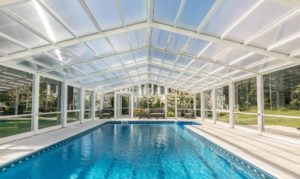

Looking Ahead
As expectations around outdoor spaces continue to evolve, adaptable design solutions are becoming essential. Retractable roofs and flexible enclosure systems offer a way to future-proof outdoor areas while improving comfort, efficiency, and usability.
To learn more about retractable roof systems and outdoor enclosure solutions, contact sales@rollacover.com.